As Seen on BBC: Why Everyone is Talking About Styes This Summer
If you've turned on the TV recently, you may have caught a segment on the BBC — the UK's national broadcaster — where an optometrist Humaira Bham, explained why styes seem to flare up just as the warmer weather arrives. It's a topic close to our hearts, so we wanted to expand on it here, share what we know as eye care specialists, and explain how to look after your eyes through the summer months.
As an optometrist-founded brand, we spend a lot of time talking about styes. They're one of the most common eye complaints we see — and yet they're widely misunderstood. So let's clear a few things up.
What exactly is a stye?
A stye (the medical name is a hordeolum) is a small, painful red bump that forms on the eyelid. It can appear on the upper or lower lid, on the inside or the outside, and it often looks a little like a spot — sometimes with a small yellow head. It can feel tender, gritty and irritating, and in some cases it makes your eyes a touch more sensitive to light.
The good news, as the BBC segment rightly pointed out, is that styes are usually nothing to panic about. Most clear up on their own within a week or so. But understanding why they happen helps you prevent them — and feel more comfortable while one settles.
Why styes spike in summer
It might seem odd that a bacterial bump would be more common in the sunshine, but summer creates the perfect conditions. We sweat more, we spend more time outdoors, and many of us swim more often. Warmth, moisture and sweat around the delicate eye area all give bacteria more opportunity to thrive — which is exactly why styes tend to trend at this time of year.
What actually causes a stye?
Styes come from bacteria — specifically staph bacteria, which live naturally on everyone's skin. Most of the time this bacteria is completely harmless. But every now and then it finds its way into one of the tiny glands along the eyelid. These glands are responsible for secreting the oily layer that keeps your tear film stable and your eyes moist (if you've ever struggled with dry, tired eyes, you'll know how important that layer is). When bacteria gets into a gland, you get a localised infection — and that's a stye.
Common triggers to watch for
- Touching your eyes with unwashed hands — one reason children get styes so often
- Swimming, especially in pools
- Not removing eye makeup properly at the end of the day
- Sharing a mascara wand or using expired makeup
- Run-down periods — stress and a weakened immune system can make you more prone
It's that last point so many people relate to: you push through a stressful, exhausting stretch, and just as you finally slow down, a stye appears to top it all off.
The symptoms to look out for
Styes tend to announce themselves with a small bump on the lid, tenderness or soreness, itching and irritation, and occasionally a little sensitivity to light that can make heading outdoors feel uncomfortable. It's a nuisance more than a danger — but it's worth knowing the signs so you can respond gently and early.
What to do if you get a stye
First and most importantly: don't panic. Styes are typically self-resolving and clear up well within a week. If you're ever worried, or if it isn't improving, your optometrist should be your first point of contact — we're here for exactly this kind of thing.
The warm compress trick
The simplest, most effective home remedy is a warm compress. You can buy one from any pharmacy, or make your own at home. Hold it gently over closed eyes for 10 to 15 minutes — the warmth helps the blocked gland release and encourages the stye to settle. It's wonderfully relaxing too, a little moment of calm in a busy day. And for little ones, you can simply rest a warm compress over their eyes while they sleep, so you're not fighting to keep it in place.
A word of caution: never squeeze or pick at a stye. Let it run its course, keep the area clean, and resist the urge to rub.
How we help you stay one step ahead
Everything we make at The BYE Co. was created by an optometrist for people with delicate, easily irritated eyes — clean, gentle formulas without the harsh chemicals found in many mass-market products. When it comes to styes, good daily eyelid hygiene is one of the best forms of prevention, and that's where our range comes in.
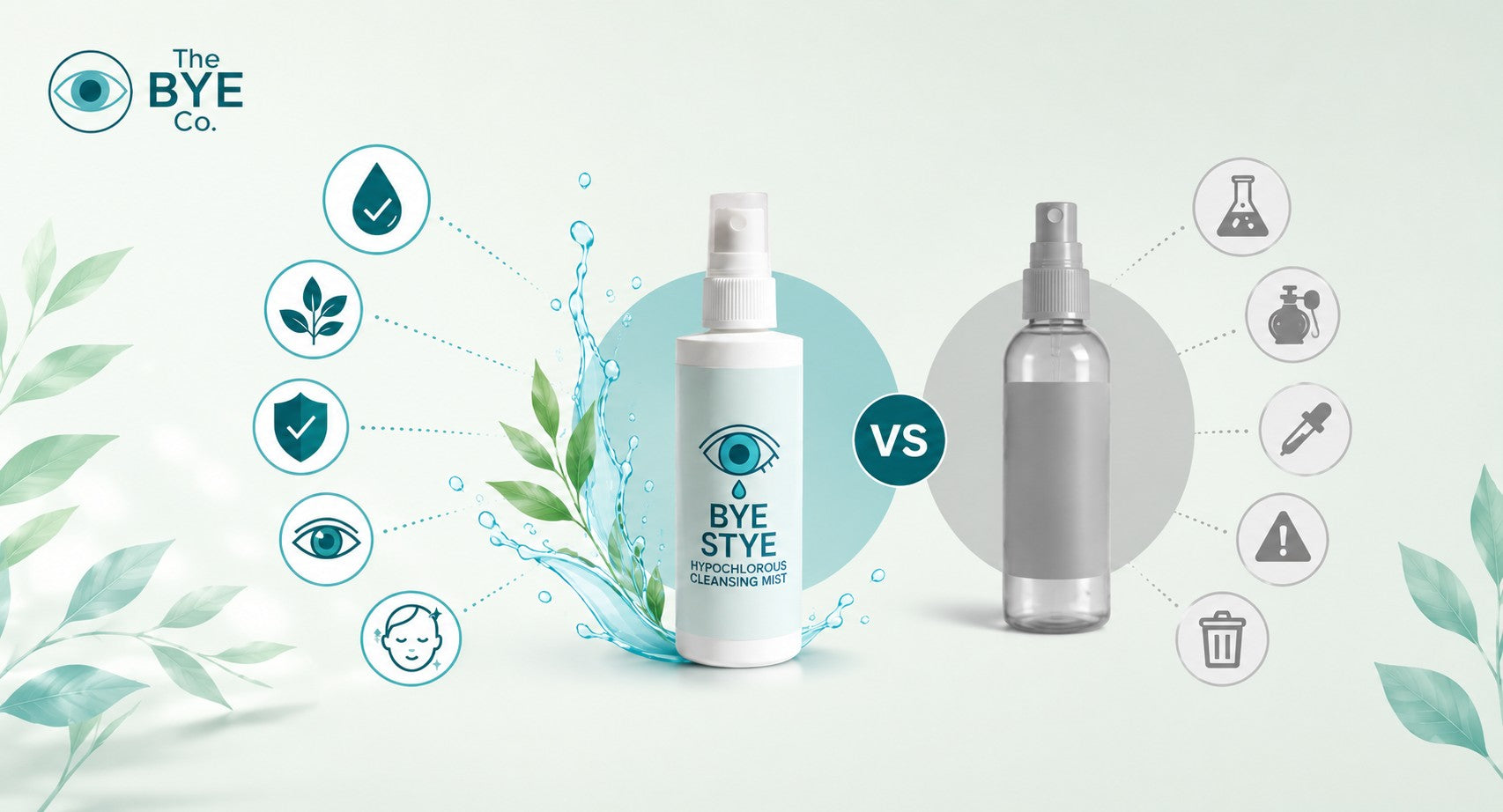
Our hero product, the BYE STYE Hypochlorous Facial Mist, is a gentle, alcohol-free mist designed to support eyelid hygiene and a healthy skin barrier around the lashes and lids. It's made with hypochlorous acid — a substance your own immune cells naturally produce — and you can read more about our ingredients here. If you'd like the full routine, our BYE STYE Starter Kit pairs the mist with an eco-friendly refill to help reduce waste.
For those who also deal with crusting or blepharitis along the lash line, our biodegradable BYE BLEPH eyelid wipes make daily cleansing simple. And if styes leave your eyes feeling dry and tired, our preservative-free BYE DRY EYE drops offer soothing, refreshing hydration. You can explore the full BYE STYE collection to find what suits you best.
A gentle summer eye-care routine
Prevention really is the kindest approach. A few simple habits go a long way through the warmer months:
- Wash your hands before touching your eyes, and avoid rubbing them.
- Always remove eye makeup before bed, and replace mascara every few months.
- Never share eye makeup or applicators.
- Cleanse your lids daily — a quick mist or wipe is enough.
- Rinse your face after swimming, and be mindful of sweat around the eyes on hot days.
For step-by-step guidance, we've put together a simple how-to-use guide for the whole range.
Don't panic — styes clear up well within a week. A warm compress and gentle, consistent eyelid care are your best friends, and your optometrist is always there if you're unsure.
We're grateful that conversations like the recent BBC segment are putting eye health in the spotlight, because styes are common, manageable and rarely cause for alarm. If summer has your eyes feeling vulnerable, treat them with a little extra care — your future self will thank you. And whenever you need us, we're only an email away.

Written by Sanaan Akhter