Article: What to Do If Something Gets in Your Eye: A Step-by-Step Safety Guide
What to Do If Something Gets in Your Eye: A Step-by-Step Safety Guide
A stray eyelash, a gust of dust on a windy walk, a flick of mascara, a splash of shampoo — getting something in your eye is one of the most common eye complaints there is. Most of the time it is harmless and over in seconds. Occasionally, though, it is a genuine emergency, and what you do in the first few minutes makes a real difference.
The BYE Co. was founded by a practising optometrist, and foreign bodies in the eye are something we see in clinic week in, week out. In this guide we share the calm, step-by-step approach we recommend, the mistakes that turn a minor irritation into a scratched cornea, and the warning signs that mean you should stop and get professional help straight away.
First, Work Out What Got in Your Eye
Before you do anything, take a breath and think about what has happened. The right response depends entirely on the type of object or substance:
- Loose particles — dust, sand, pollen, an eyelash, a crumb of make-up. Usually minor and easy to rinse out.
- Liquids and chemicals — cleaning products, bleach, hair dye, sun cream, hand sanitiser, garden or DIY products. These need immediate, prolonged rinsing.
- High-speed fragments — anything thrown up by hammering, grinding, drilling, strimming or sawing. These can penetrate the eye even when it feels fine.
- Objects stuck in the eye — anything visibly embedded in the surface. These must never be removed at home.
If a chemical has splashed into your eye, skip straight to the chemical section below and start rinsing now. Every second of delay matters more than reading the rest of this guide.
Step-by-Step: Removing Dust, Grit or an Eyelash
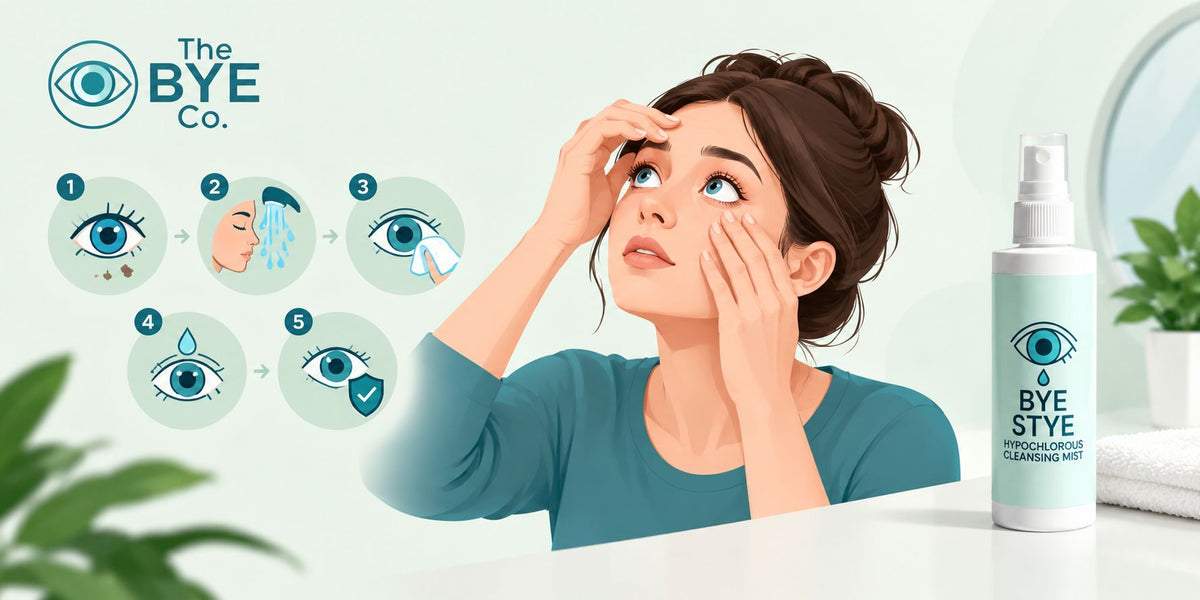
For small, loose particles, follow these steps in order:
- Don’t rub. It is the instinctive reaction, but rubbing drags the particle across the cornea (the clear front window of the eye) and can scratch it.
- Wash your hands thoroughly with soap and water. Fingers are the most common way bacteria reach an already irritated eye.
- Blink several times. Your tears are designed to flush debris away, and gentle blinking is often all it takes.
- Try the lid trick. Gently pull your upper eyelid down over your lower lashes and let it slide back. The lower lashes can sweep a particle off the underside of the upper lid.
- Rinse with clean water. Lean over a sink, tilt your head so the affected eye is lower, and pour clean, lukewarm water across the open eye from the inner corner outwards. An eye bath or sterile saline eyewash works well if you have one.
- Look, don’t poke. In good light and a mirror, gently pull the lower lid down and look up, then look down while lifting the upper lid. If you can see a particle resting on the lid or the white of the eye, lift it away with the corner of a clean, damp tissue. Never touch the coloured part of the eye.
Once the particle is out, a gritty, scratchy feeling can linger for a short while. A preservative-free lubricating drop such as BYE DRY EYE, made with 0.1% sodium hyaluronate and no preservatives, can help the eye feel more comfortable while it settles. If the feeling of something still being there lasts more than a few hours, see an optometrist — it may be a small scratch, or a particle trapped under the upper lid.
If You Wear Contact Lenses
Debris can become trapped behind a lens and rub against the cornea with every blink. With clean, dry hands, remove the lens as soon as you comfortably can, then rinse the eye as above. Don’t put the same lens back in — use a fresh one, or wear glasses for the rest of the day if your eye still feels irritated. Never rinse lenses or eyes with tap water and then reinsert the lens, as tap water can carry organisms that cause serious lens-related infections.
What to Do If a Chemical Splashes in Your Eye
Chemical injuries are the true emergency of everyday eye accidents. Alkaline products such as oven cleaner, drain unblocker, cement, lime and some hair treatments are especially dangerous because they keep penetrating the eye tissue after contact.
- Rinse immediately with cold running water — a tap, a shower or a jug of clean water. Hold the eyelids open with your fingers so water reaches the whole eye surface.
- Keep rinsing for at least 20 minutes. It will feel like a very long time. Do it anyway.
- Remove contact lenses while rinsing, if they don’t come out on their own.
- Tilt your head so the water runs away from your other eye.
- Go to A&E or call 999 once you have rinsed, and take the product or its label with you so the team knows exactly what they are dealing with.
Don’t try to neutralise the chemical with anything other than water, and don’t use eye drops, mists or wipes as a substitute for flushing. Products designed for daily comfort are not designed for injury first aid.
When Something Is Stuck in the Eye
If an object is embedded in the eye, or you suspect a fragment hit the eye at speed:
- Do not try to remove it, and do not press on the eye.
- Cover the eye loosely with something rigid that doesn’t touch it, such as the bottom of a clean paper cup, to stop it being knocked.
- Try to keep both eyes still. Your eyes move together, so closing the uninjured eye can reduce movement of the injured one.
- Go straight to A&E or call 999.
A small, fast-moving metal fragment from grinding or hammering can enter the eye leaving barely any discomfort. If you were doing that kind of work without eye protection and felt something hit your eye, get it checked the same day, even if it feels fine.
Red Flags: When to Get Help Urgently
Seek same-day help from an optometrist, contact NHS 111, or go to A&E if you notice any of the following:
- Blurred, reduced or double vision that doesn’t clear with blinking
- Pain that is severe, or that gets worse rather than better
- You can’t keep the eye open, or bright light is painful
- Blood visible in the eye, or a change in the shape of the pupil
- The feeling of something in the eye persists after rinsing
- Redness, swelling or sticky discharge developing over the following days
Many high street optometrists offer urgent appointments for minor eye problems, and they have the specialist equipment to find and safely remove particles that are invisible in a bathroom mirror.
Mistakes We See Time and Time Again
- Rubbing the eye — the single biggest cause of scratches from otherwise harmless particles.
- Using tweezers, cotton buds or fingernails on the eye surface.
- Stopping a chemical rinse too early because the eye feels a little better.
- Reaching for redness-relief drops to hide irritation instead of finding out why the eye is red.
- Waiting days to see whether a persistent foreign-body feeling goes away on its own.
Caring for Your Eyelids Once Your Eye Has Settled
After an irritated day, lids and lashes can collect tears, make-up residue and debris. Once your eye feels normal again and nothing more serious is going on, a gentle cleansing routine helps keep the area clean and comfortable. Our BYE STYE range is built around pure electrolysed hypochlorous acid — the same compound your own white blood cells produce — in an alcohol-free, fragrance-free formula. Hold the bottle 15–20 cm from your face, close your eyes, mist over the lids and lashes and let it air dry. Always use it on closed eyes and never on an eye that is injured or still being assessed.
If you prefer a wipe, BYE BLEPH biodegradable eyelid wipes are individually sacheted, so you can use a fresh one for each eye and avoid carrying debris from one side to the other. For a step-by-step routine, read our guide to a daily eyelid hygiene routine, or see full directions on our how to use our products page.
How to Reduce the Risk of It Happening Again
- Wear safety glasses for DIY, gardening, strimming and any work that throws up dust or fragments. Everyday glasses are not a substitute.
- Wear sunglasses or wraparound glasses on windy days, at the beach and when cycling.
- Keep cleaning products below eye level and point spray nozzles away from you before pressing.
- Apply make-up carefully and remove it fully at night — our eye care tips for make-up wearers cover how to keep flakes and residue away from the lash line.
- Keep your hands clean and away from your eyes, particularly when travelling. A pocket-sized BYE STYE Mini (20ml) fits easily in a bag for refreshing closed lids on the go.
Dry eyes also tend to feel more sensitive to every speck of dust, so if your eyes often feel gritty on planes, our cabin air survival guide for long flights is worth a read.
Frequently Asked Questions
Can I use tap water to rinse my eye?
Yes. For dust, grit and chemical splashes, clean running tap water is fine and is often the fastest option. Sterile saline is gentler if you have it to hand, but never delay a chemical rinse to go looking for it. If you wear contact lenses, don’t reinsert a lens after it has been in contact with tap water.
Why does it still feel like something is in my eye after it’s gone?
A particle can leave a tiny scratch on the cornea that feels exactly like something is still there. Small scratches often settle within a day or two, but because they can become infected, any feeling that lasts more than a few hours should be checked by an optometrist.
Can I use BYE STYE to rinse something out of my eye?
No. BYE STYE Hypochlorous Facial Mist is designed for misting over closed eyelids, lashes and skin as part of daily hygiene. To remove a foreign body, use clean water or sterile saline, and seek professional help if it doesn’t come out. You’ll find more answers about our formulas on our FAQs page.
Should I put a patch over my eye?
Not routinely. Only cover an eye if an object is embedded in it, and then use something rigid that doesn’t press on the eye, while you get to A&E.
Gentle Care, Every Day
Most things that land in your eye can be handled calmly at home: don’t rub, wash your hands, blink, rinse and look. Chemicals mean 20 minutes of rinsing and a trip to A&E. Anything embedded, anything that hit the eye at speed, or any change in your vision means professional help, today.
Once your eyes are back to normal, a simple daily routine goes a long way towards keeping them clean, calm and comfortable. Explore our full range of gentle eye care essentials, all developed by an optometrist for delicate eyes and sensitive skin.

Written by Sanaan Akhter